Finish
Limewash Brick: What It Is, How It Looks, and How Long It Lasts
Limewash is a breathable, lime-based mineral finish that gives brick a soft, chalky, old-world look. Here's how it works, where it shines, and where it doesn't.
7 min read
The short version
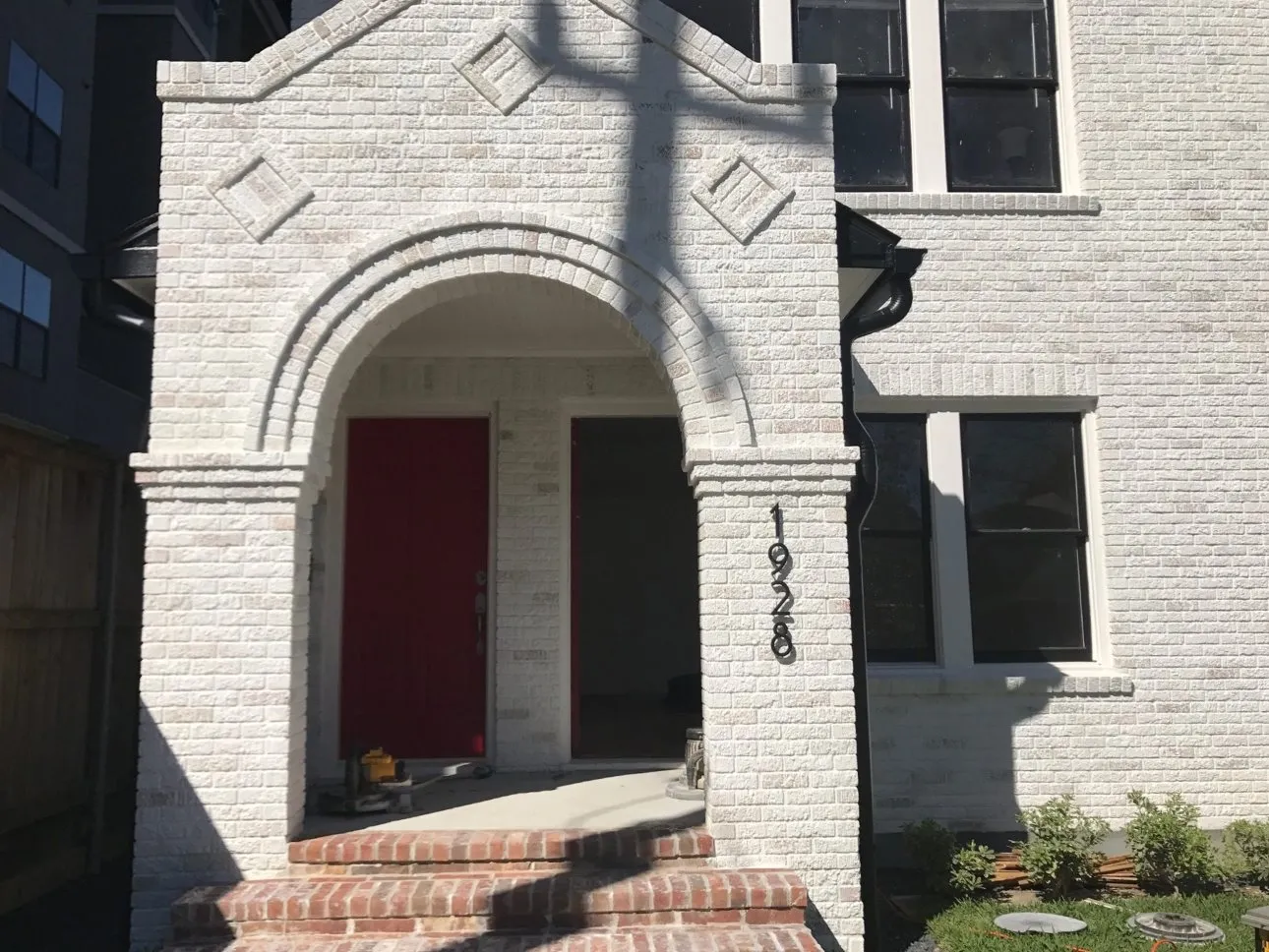
Limewash is one of the oldest building finishes in the world: slaked lime, water, and natural pigment. It soaks into porous brick rather than forming a film on top, then hardens by pulling carbon dioxide from the air. The result is a soft, matte, slightly mottled finish with a chalky depth paint can’t fake. It’s breathable, it ages gracefully, and it’s the most forgiving of the brick washes — but it only works on brick that hasn’t been painted or sealed.
How limewash works
Limewash starts as calcium hydroxide (hydrated or “slaked” lime) suspended in water. Brushed onto damp, porous masonry, it penetrates the surface pores. Over the following days and weeks it reacts with CO₂ in the air and turns back into calcium carbonate — essentially a thin layer of limestone bonded into the face of the brick. That process is called carbonation.
Because it becomes part of the surface instead of sitting on top of it, limewash:
- Breathes. Water vapor moves freely through it, so moisture inside the wall can escape. That matters in a humid climate.
- Doesn’t peel. There’s no film to blister or flake — it wears gradually instead.
- Is naturally alkaline, which discourages mold and mildew growth on the surface.
What it looks like
Limewash dries noticeably lighter than it goes on, and it’s never perfectly uniform. Expect a cloudy, hand-made variation — darker where it absorbed more, lighter where it absorbed less. Applied thin, red brick shows through warmly; with two coats, it reads almost solid but still soft.
Popular directions:
- Classic white or warm white over red brick — the “European farmhouse” look
- Greige and putty tones — softer contrast, works well with stone accents and black windows
- Soft grays over orange brick to cool it down
Where limewash is a great fit
- Unpainted, unsealed clay brick in sound condition
- Homeowners who want a lighter look but aren’t 100% sure — limewash can be partly wiped back while wet, and it naturally softens over the years
- Historic or older homes where breathability matters
- Interior fireplaces and accent walls (with proper ventilation and a test patch)
Where it’s not
- Painted brick. Limewash needs raw, porous masonry to bond. Over latex paint it will just rub off.
- Sealed or water-repellent-treated brick — same problem; the sealer blocks absorption. A test patch tells you quickly.
- Very dense, glazed, or smooth-faced brick that barely absorbs water.
- Anyone who wants zero maintenance. Limewash is designed to weather. On walls that take direct rain or sprinkler spray, expect it to thin over time.
How long does limewash last?
It depends on exposure. Sheltered walls can look good for many years; walls that take direct weather will gradually patina and thin, and many homeowners refresh a coat every 5–7 years. That gradual wear is part of the appeal for some people and a dealbreaker for others — if you want a finish that stays exactly as applied, look at a mortar wash or a mineral silicate paint instead.
Can limewash be removed?
Partly. While it’s still wet you can wipe or rinse it back — that’s how applicators create the aged, “washed-off” look. Once fully cured, it can often be reduced with a pressure washer and a masonry cleaner, but rarely removed 100% from deep pores. Treat it as semi-permanent.
Limewash in Houston’s climate
Humidity slows drying and carbonation, and summer heat can make limewash dry too fast on sun-baked walls. Pros mist the brick before application, avoid direct afternoon sun, and won’t apply ahead of heavy rain. See Brick washes in Houston humidity.
Limewash vs. whitewash vs. German smear
- Whitewash is usually thinned paint or a masonry wash — more uniform, brighter, and it sits on the surface.
- Limewash is mineral, soaks in, and looks softer and more varied.
- German smear is mortar — it adds physical texture and is permanent. → Full comparison
Should you DIY limewash?
It’s the most DIY-friendly wash, but a whole house is a big, ladder-heavy job, and the finish is only as good as the prep. Cracked joints, efflorescence, and old repairs that don’t match will all show through. → DIY vs. hiring a pro
- Family owned since 1993
- 800+ reviews
- 20,000+ projects
- BBB A+
- 1-year workmanship warranty
- Financing available
Frequently asked questions
How long does limewash last?
Can you limewash painted brick?
Can limewash be removed?
What's the difference between limewash and whitewash?
Limewash in the real world
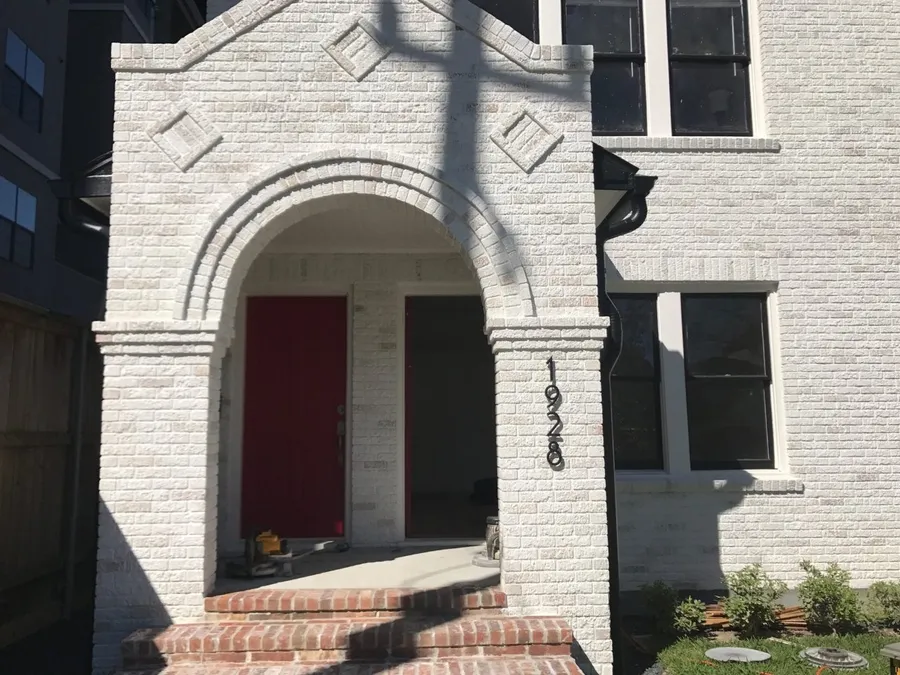
Brick Restoration limewash projects across the Houston area.
 Houston area