Finish
Whitewash Brick: A Soft, Semi-Transparent Update
Whitewashing brick means applying a thinned, semi-transparent coat that brightens brick while letting its color show through. Here's how it differs from limewash and paint.
5 min read
The short version
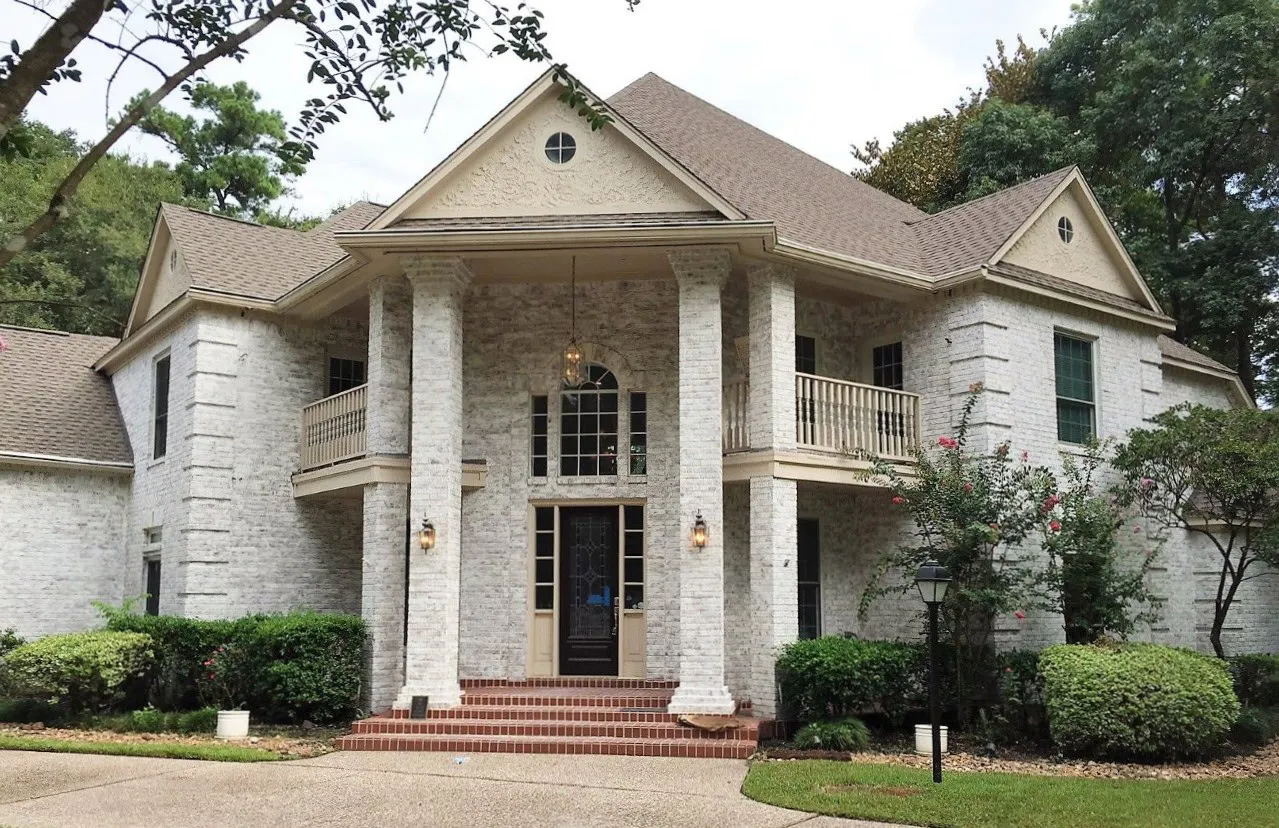
A whitewash is a thinned, semi-transparent coating brushed or sprayed over brick and mortar. It mutes strong red and orange tones and brightens the whole facade while the brick’s color and texture still show through. It’s the lightest-touch, most uniform of the wash finishes.
A word on the name
“Whitewash” is used loosely online. Historically it meant a lime-based wash (which today we’d call limewash). In modern practice it usually means a diluted masonry coating or paint applied thin. That difference matters: a paint-based whitewash sits on the surface, while a true limewash soaks in and breathes. When you get quotes, ask exactly what product is going on your wall.
How it’s applied
There are two common approaches:
- Even coat. A thinned wash goes over all brick and mortar for a consistent, hazy veil. More thinning = more brick showing.
- Worked finish. Areas are coated thicker and thinner, then some wet coating is scrubbed or rinsed off to create a worn, aged look.
Either way, the job starts with cleaning, repairs, and a test area to dial in the dilution.
What it looks like
- Light whitewash over red brick → soft pink-beige warmth
- Heavier whitewash → bright, near-white with the brick pattern still visible
- Tinted washes (cream, greige, light gray) → more modern, less “cottage”
Pros
- Most uniform and predictable of the washes
- Keeps the brick’s character visible
- Usually the fastest application
- Can sometimes go over previously painted brick (limewash can’t)
Cons
- Paint-based washes form a film — choose a breathable masonry product, not interior latex thinned with water
- Hard to fully remove once cured
- Less texture and depth than limewash or German smear
Whitewash vs. limewash
| Whitewash | Limewash | |
|---|---|---|
| Base | Usually thinned masonry coating/paint | Slaked lime + water + pigment |
| How it bonds | Film on the surface | Soaks in, carbonates into the brick face |
| Look | Brighter, more even | Softer, chalkier, mottled |
| Over painted brick | Sometimes | No |
| Weathering | Holds its look; can wear unevenly | Patinas gradually by design |
Cost
Generally the least labor-intensive exterior wash. Whole-home pricing still depends mostly on brick area, height, and repairs. → Cost guide
- Family owned since 1993
- 800+ reviews
- 20,000+ projects
- BBB A+
- 1-year workmanship warranty
- Financing available
Frequently asked questions
Can you whitewash or smear over painted brick?
What's the difference between limewash and whitewash?
How do you maintain a brick wash?
Whitewash in the real world
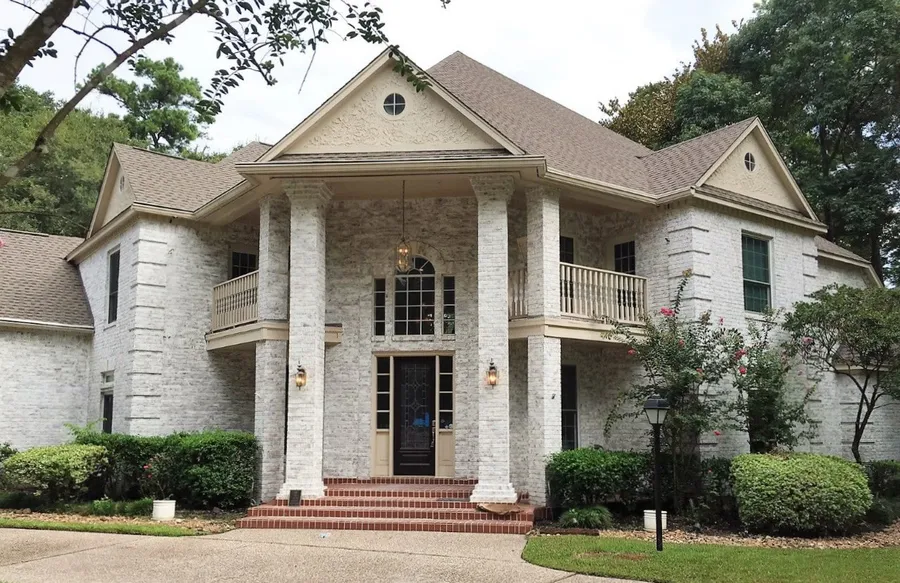
Brick Restoration whitewash projects across the Houston area.
 Houston area